

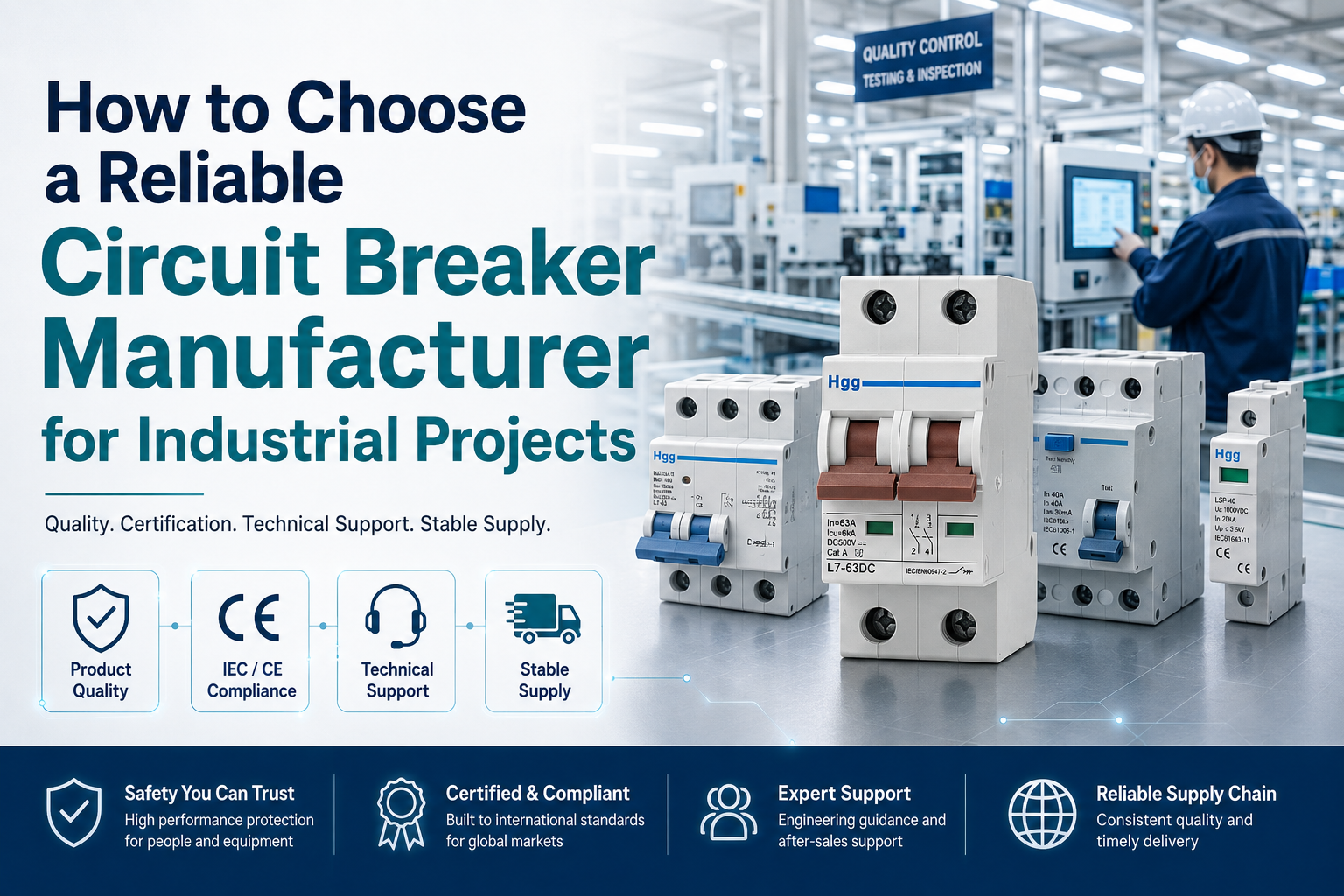
Choosing a reliable circuit breaker manufacturer requires evaluating more than product price or basic specifications. Industrial projects need manufacturers that can provide proven product quality, compliance certifications, technical support, customization capability, and long-term supply stability. A dependable manufacturer should act as a technical partner, helping engineers and project teams achieve safe, efficient, and reliable electrical protection systems.
For industrial applications, selecting the right electrical protection supplier can directly influence equipment safety, operational continuity, and maintenance costs. The following factors should be carefully considered before making a decision.
What Should You Consider When Choosing a Circuit Breaker Manufacturer?
A qualified circuit breaker manufacturer should demonstrate strong manufacturing capability, product reliability, and industry experience. Industrial circuit breakers are critical components that protect electrical systems from overloads, short circuits, and abnormal current conditions. Any failure can lead to equipment damage, production downtime, or safety risks.
Key evaluation factors include:
1. Product Quality and Manufacturing Standards
The first consideration is whether the manufacturer follows internationally recognized quality standards. Industrial circuit breakers should meet relevant certifications and testing requirements, such as IEC standards, to ensure consistent performance under demanding operating conditions.
A professional manufacturer should have:
Strict raw material selection processes
Automated production and assembly systems
Comprehensive quality inspection procedures
Routine electrical performance testing
Reliable product traceability systems
Manufacturing quality is especially important for applications such as factories, energy facilities, infrastructure projects, and commercial buildings where electrical reliability is essential.
How Do You Evaluate the Reliability of a Circuit Breaker Supplier?
Supplier reliability depends on both product performance and business capability. A trustworthy circuit breaker manufacturer should be able to provide stable supply, technical expertise, and responsive after-sales support.
Industrial buyers should evaluate:
Technical Expertise
A strong supplier should understand different application requirements, including:
Low-voltage distribution systems
Industrial control panels
Motor protection applications
Renewable energy systems
Data centers and critical power environments
The supplier should be capable of recommending suitable circuit breaker solutions based on load characteristics, installation environments, and protection requirements.
Production Capacity and Supply Stability
Large industrial projects often require continuous product availability. Manufacturers with mature production systems can reduce risks related to:
Delivery delays
Product shortages
Batch quality inconsistencies
Project schedule interruptions
A supplier’s production capacity should match the scale and timeline of your project.
What Certifications Should a Circuit Breaker Manufacturer Have?
Certifications help verify whether a manufacturer’s products meet safety and performance requirements.
Important certifications and standards may include:
IEC 60947 series for low-voltage switchgear and controlgear
CE marking for applicable European markets
ISO quality management certifications
RoHS environmental compliance
However, certifications alone are not enough. Industrial customers should also review product testing data, technical documents, and real application experience.
Why Is Technical Support Important When Selecting an Electrical Protection Supplier?
Circuit breaker selection is not only a purchasing decision; it is an engineering decision. The wrong protection device may result in insufficient protection, unnecessary equipment trips, or reduced system reliability.
A professional supplier should provide:
Product selection guidance
Installation recommendations
Coordination analysis support
Technical documentation
Troubleshooting assistance
For complex industrial projects, cooperation with an experienced manufacturer can improve system safety and reduce future maintenance costs.
How Do You Compare Different Circuit Breaker Manufacturers?
When comparing manufacturers, avoid focusing only on unit price. A lower initial cost may lead to higher operational expenses if products have shorter service life or unstable performance.
A comprehensive comparison should include:
| Evaluation Factor | Why It Matters |
|---|---|
| Product reliability | Ensures long-term electrical system protection |
| Manufacturing experience | Indicates technical maturity and production capability |
| Certification compliance | Confirms safety and quality requirements |
| Customization ability | Supports specific project requirements |
| Delivery capability | Helps maintain project schedules |
| Technical service | Reduces installation and maintenance risks |
The best manufacturer is the one that provides the highest overall value throughout the product lifecycle.
What Makes a Circuit Breaker Manufacturer Suitable for Industrial Applications?
Industrial applications require circuit breakers with higher reliability, durability, and adaptability than standard commercial installations.
A suitable manufacturer should offer:
Advanced Product Design
Modern industrial circuit breakers should provide features such as:
High breaking capacity
Accurate protection performance
Long mechanical and electrical lifespan
Compact installation design
Easy maintenance and replacement
Application Experience
Manufacturers with experience in industrial projects understand real-world challenges, including harsh environments, high operating loads, and complex electrical distribution requirements.
This practical knowledge helps ensure that selected products perform reliably after installation.
How Can You Reduce Risks When Choosing an Electrical Protection Supplier?
Risk reduction starts with supplier evaluation before purchasing.
Recommended steps include:
Review the manufacturer’s technical qualifications and certifications.
Check product testing reports and quality control procedures.
Evaluate previous industrial project experience.
Confirm production capacity and delivery reliability.
Assess technical support and after-sales service.
Building a long-term relationship with a professional supplier can provide better product consistency and faster technical assistance.
Conclusion
Choosing the right circuit breaker manufacturer is essential for industrial electrical safety, project reliability, and long-term operating efficiency. The ideal supplier should combine high-quality products, strict manufacturing standards, technical expertise, and dependable service capabilities.
For industrial projects, working with an experienced electrical protection supplier helps ensure that circuit protection systems meet safety requirements while supporting stable operation throughout the equipment lifecycle. A careful supplier evaluation process can prevent costly failures and create long-term value for engineering projects.
FAQs
1. What is the most important factor when choosing a circuit breaker manufacturer?
Product quality, certification compliance, and proven industrial experience are the most important factors.
2. Why should industrial projects work with an experienced electrical protection supplier?
Experienced suppliers provide better product selection, technical support, and reliable delivery.
3. Are certified circuit breakers always better?
Certifications indicate compliance with standards, but buyers should also evaluate testing quality, application experience, and supplier reliability.
4. How can I verify a circuit breaker manufacturer’s reliability?
Check certifications, production capability, customer references, product testing records, and after-sales support.
5. Should price be the main factor when selecting a circuit breaker supplier?
No. Long-term reliability, safety performance, and lifecycle cost are usually more important than initial purchase price.
Related Circuit Protection Device From Religare