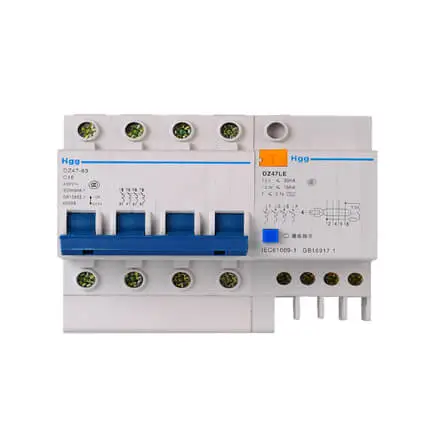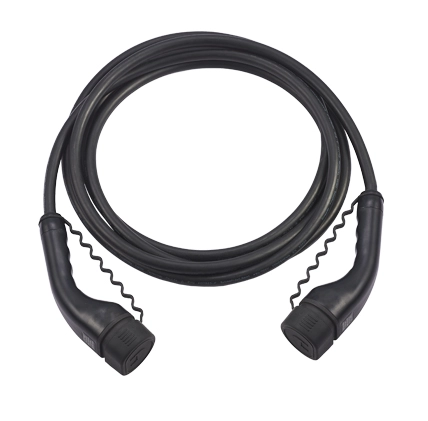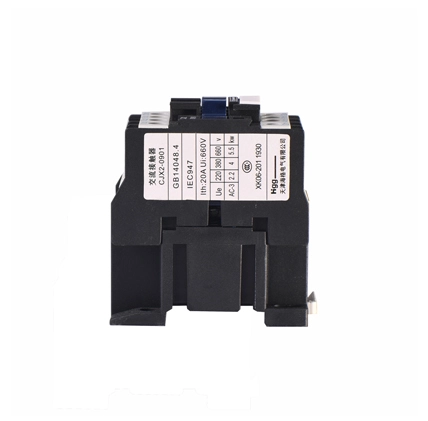


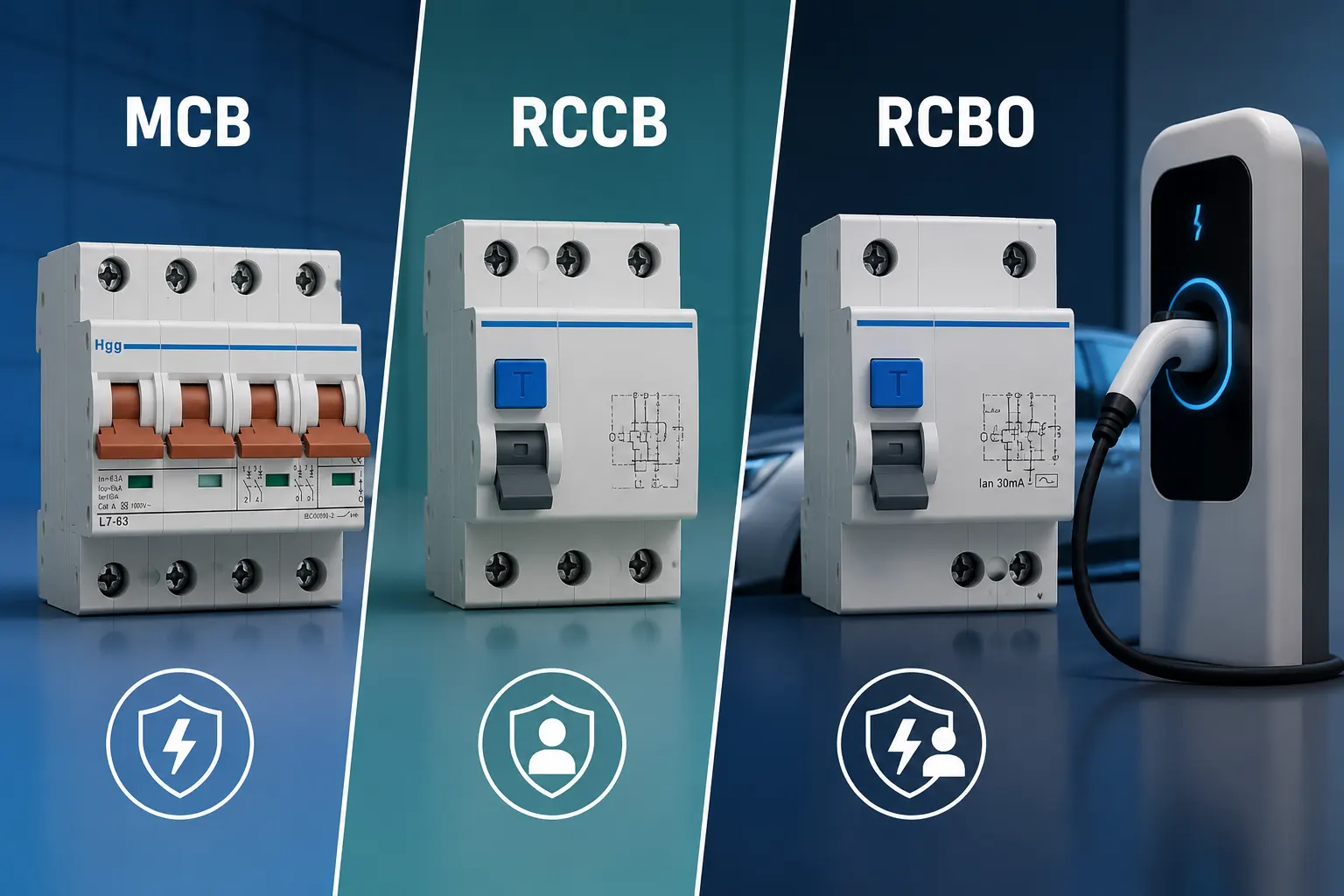
An EV charger requires both overcurrent protection and leakage protection to operate safely. An MCB (Miniature Circuit Breaker) protects against overload and short circuit, an RCCB (Residual Current Circuit Breaker) protects against earth leakage, and an RCBO combines both functions in one device. For most EV charging installations, especially residential wallboxes, an RCBO or a combination of RCCB + 2 phase MCB is the recommended configuration.
Why EV Chargers Require Specialized Circuit Protection
EV chargers operate as continuous high-load electrical devices, typically drawing 16A or more for extended periods. This creates three primary risks:
Overcurrent (overload or short circuit)
Earth leakage (risk of electric shock)
Thermal stress on cables and connections
Unlike intermittent household appliances, EV chargers demand dedicated protection systems designed for sustained loads.
What Does an MCB Do in EV Charging Systems?
An MCB protects the circuit from:
Overload (e.g., current exceeding 16A/20A rating)
Short circuit faults
Why a 2 Phase MCB Is Common in EV Charging
In single-phase EV charger installations, a 2 phase MCB (2-pole MCB) is widely used because it disconnects both live and neutral conductors simultaneously, ensuring:
Complete circuit isolation
Improved safety during maintenance
Compliance with many regional electrical standards
However, an MCB alone cannot detect leakage current, which is critical in EV applications.
What Does an RCCB Do?
An RCCB detects residual (leakage) current caused by insulation failure or accidental contact.
Key Functions
Trips when leakage current exceeds threshold (e.g., 30mA)
Protects users from electric shock
Prevents fire hazards caused by leakage
Limitations
Does not protect against overload or short circuit
Must always be used with an MCB
What Is an RCBO and Why Is It Preferred?
An RCBO combines:
MCB (overcurrent protection)
RCCB (leakage protection)
Advantages for EV Charging
Space-saving design in distribution boards
Simplified installation
Faster fault detection and isolation
Reduced wiring complexity
For modern EV charging systems, RCBOs are increasingly the preferred protection solution, particularly in residential and commercial wallbox installations.
Which Protection Device Is Best for EV Chargers?
Recommended Configurations
Option 1: RCBO (Best Overall Solution)
Integrated protection (overcurrent + leakage)
Ideal for residential wallbox installations
Simplifies system design
Option 2: RCCB + 2 Phase MCB
Flexible configuration
Common in industrial or customized systems
Allows independent selection of protection ratings
Option 3: MCB Only (Not Recommended)
Provides only overcurrent protection
Leaves users exposed to leakage risks
Does not meet modern EV safety standards
Do EV Chargers Require Type A or Type B RCD?
EV chargers can generate DC residual currents, which standard protection devices may not detect.
Typical Requirements
Type A RCD: Suitable if the charger includes built-in DC leakage protection
Type B RCD: Required if no internal DC protection is present
Selecting the correct type ensures compliance with IEC standards and prevents nuisance tripping or undetected faults.
What Size MCB Is Required for a 3.7 kW EV Charger?
For a typical 3.7 kW charger (single-phase, 230V):
Current ≈ 16A
Recommended MCB rating: 16A or 20A
Configuration: 2 phase MCB for full isolation
Cable size and installation conditions must also be considered when finalizing protection ratings.
Is RCBO Mandatory for EV Charger Installation?
In many regions, regulations increasingly favor combined protection devices like RCBOs for EV circuits.
Even where not mandatory, RCBOs are preferred because they:
Reduce installation errors
Improve system reliability
Enhance user safety
For manufacturers and suppliers, offering RCBO-integrated solutions aligns with global safety trends.
Common Protection Design Mistakes in EV Charging Systems
1. Using Only an MCB
Fails to provide leakage protection, increasing shock risk.
2. Incorrect RCD Type Selection
Using Type AC instead of Type A or Type B can result in undetected DC leakage.
3. Undersized Circuit Protection
Leads to frequent tripping or overheating.
4. Lack of Dedicated Circuit
Sharing circuits with other loads compromises safety and performance.
How to Design a Safe EV Charging Protection System
A professional EV charging circuit should include:
Dedicated power line from distribution board
Correctly rated 2 phase MCB or RCBO
Residual current protection (Type A or B)
Proper grounding system
Compliance with IEC/EN standards
For B2B buyers, integrating circuit protection devices with EV charging solutions ensures better performance, easier certification, and higher market acceptance.
Conclusion
EV charging systems require a comprehensive protection strategy, not just basic circuit breakers. While MCBs handle overcurrent risks, they must be combined with leakage protection through RCCB or integrated into an RCBO.
For most applications, especially residential and commercial installations, RCBOs or RCCB + 2 phase MCB configurations provide the optimal balance of safety, compliance, and efficiency. For manufacturers and suppliers, aligning product offerings with these protection standards is essential to meet global EV infrastructure demands and ensure long-term operational safety.
Related Circuit Protection Device From Religare